


Nanny Visa Dubai Accommodation Rules: Private Room and Living Space Standards
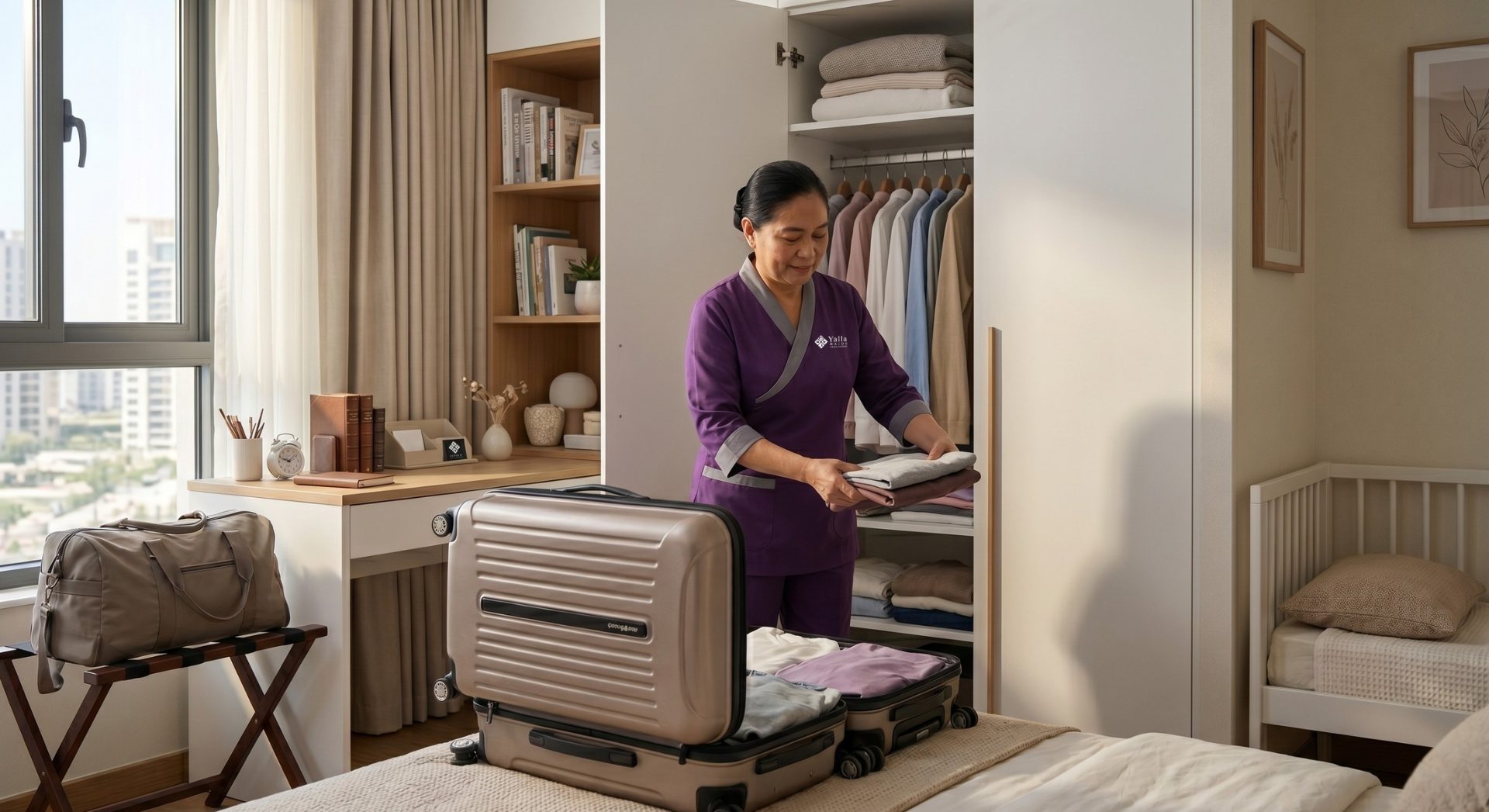
A nanny visa Dubai application requires a private room for the helper that meets MOHRE accommodation standards: dedicated sleeping space, ventilation, privacy and reasonable storage. The rule is structural rather than optional. Families that plan the room layout in advance see the placement settle cleanly. Families that improvise space at the last minute consistently run into friction.
Families applying for a nanny visa Dubai engagement often focus on the candidate paperwork and underestimate the accommodation side of the file. The framework expects the household to provide a private room for the helper with proper ventilation, reasonable storage and enough living space to be a real sleeping room rather than an afterthought. The standard is not arbitrary. It exists because the helper lives where she works and a room that does not work for her means the placement does not work either. Knowing what the requirement actually looks like before the candidate arrives is what prevents the first month from being spent on a room redesign.
The notes below walk through what the framework expects on the accommodation side, how the room layout affects the placement and where families typically need to adjust their existing space. Households that want a parallel reference for the wider employer-duty framework that sits alongside accommodation can use the live-in maid requirements and accommodation standards article as a companion read.
What the Nanny Visa Framework Expects on Accommodation
The nanny visa Dubai framework expects the helper to have a dedicated sleeping space that is hers across the engagement. The room should have a door that closes, reasonable ventilation through a window or proper air circulation, enough storage for her belongings and a layout that allows her to rest properly between work shifts. Why does this matter beyond the regulatory check? Because the helper spends most of her non-working hours in this room and a room that does not work for her becomes a placement that does not work for the family. The standard is structural protection for both sides rather than a paperwork formality.
The accommodation elements the framework expects to see are the ones below.
- A private bedroom with a door that closes and locks from the inside, not a shared or partitioned corner
- Ventilation through a window or proper air circulation, not a sealed interior room without airflow
- A dedicated bed, mattress and bedding rather than a folding cot stored elsewhere when not in use
- Storage for her belongings such as a wardrobe or shelving, plus a small space for personal items
- Access to bathroom facilities that are either dedicated to her or shared with reasonable privacy
Why the Private Room Rule Holds More Weight in a Nanny Visa Dubai Engagement
A nanny visa Dubai engagement carries a child-focused brief that often involves night care, early morning routines and irregular hours around feeding or school schedules. She needs proper rest more than most household roles because the work pattern is more demanding on her sleep cycle. A room that does not let her actually rest pushes her into early burnout and the placement breaks during what should have been the settling-in period. The private room rule exists not as a formality but as the structural foundation for the helper being able to do the job at all across the months ahead.
Sponsors who want a wider view of how the salary tier interacts with the credential layer and the role demands can use the nanny visa Dubai cost framework article as a parallel reference for the broader picture sitting alongside accommodation.
Nanny Visa Dubai Accommodation Across Common Home Types
The table below pairs each common Dubai home type with how the accommodation requirement reads in practice and where families typically need to adjust their existing layout. The pattern is not the same across apartments, villas and shared homes.
Home Type | How the Room Requirement Reads | Common Adjustment Families Make |
Three-bedroom apartment | Dedicated maid room usually built into the layout | Verify ventilation and add proper storage if missing |
Two-bedroom apartment | No built-in maid room, a guest room is reassigned | Convert a study or store room with proper window |
Studio or one-bedroom apartment | Structurally difficult to accommodate a live-in placement | Live-out configuration is the more realistic option |
Villa in a gated community | Maid quarters usually built in as a separate space | Confirm ventilation and proximity to family rooms |
Standalone villa | Layout flexibility, dedicated room can be designed | Ensure the room is not isolated from the family living area |
Shared accommodation or compound | Privacy harder to guarantee for the helper | Review compound rules on domestic worker accommodation |
Infant Care and the Nanny Visa Dubai Room Layout
Households applying for a nanny visa Dubai engagement with an infant on the file often want the helper close to the baby room for night feeds and overnight monitoring. The layout question becomes how to give the helper a private room of her own and still keep her within reach of the baby. Some families place the helper room next to the baby room with a separating door. Others use a connecting wall and an internal monitor. The arrangement varies by villa or apartment layout and the right answer is the one that gives the helper proper privacy during her off-hours while keeping her practically available when she is on duty. The two goals are not in conflict if the room is planned thoughtfully.
Households that want a wider reference for how the newborn-care brief shapes the wider engagement can use the hiring nanny in Dubai newborn infant care experience article as a parallel read.
What Happens If the Accommodation Does Not Meet the Standard
Nanny visa Dubai applications that do not show clear accommodation can stall at the MOHRE review stage and the family is asked to confirm the room arrangement before the visa moves forward. The more common pattern is that the application proceeds but the placement struggles in the first month because the room was assembled in a hurry and does not actually work for the helper. The honest answer is to handle the room layout in the same week the candidate is shortlisted rather than the week she arrives. Families that build the room properly before the helper lands in the home consistently see the placement settle without friction.
Sponsors who want a wider reference for how the room layout affects the wider boundary framework can use the live-in maid privacy boundaries inside Dubai households article as a companion read on what the room signals to the helper across the engagement.
Common Mistakes Households Make on Nanny Visa Dubai Accommodation
A few patterns show up regularly when households set up the nanny visa Dubai accommodation for the first time. Each one is easy to correct once it is named and naming them before the candidate arrives prevents most of the first-month friction.
- Assuming a corner of the living room with a folding screen counts as a private room
- Using a windowless interior store room without proper air circulation for sleeping accommodation
- Sharing the room with the children, which breaks the privacy expectation on both sides
- Treating the room as overflow storage and leaving household items inside her dedicated space
- Assembling the room in the day before the helper arrives rather than the week she was matched
When the Coordinator Should Visit the Room Before the Helper Arrives
Agency coordinators often visit the home for a nanny visa Dubai engagement before the helper arrives to review the room arrangement and flag anything that needs adjusting. Why is this useful? Because a fresh pair of eyes spots issues the family no longer sees in their own home. The coordinator can suggest moving storage, improving ventilation or adjusting the bed orientation in ways that make the room work much better for the helper. Sponsors who want a wider reference for how the coordinator role runs alongside the placement can use the how a MOHRE-certified maid agency in Dubai works article as a parallel read.
Pre-Arrival Room Setup Checklist for a Nanny Visa Dubai Placement
A short pre-arrival checklist for a nanny visa Dubai placement makes the room setup easier in the week before the helper lands. The list usually covers a final ventilation check, a storage walk-through, a bed and bedding inspection and a layout review against the family routine. Households that want to compare the broader engagement structure that sits behind this checklist can use the hire a live-in nanny in Dubai service article as a parallel reference for the first-day flow.
Most families find the checklist works best at the eight or ten day mark before the candidate arrives. That window leaves time to source any missing items, move storage out of the room and confirm the ventilation works properly without rushing. Families that wait until the day before consistently find themselves making compromises that surface as friction in the first week. The checklist exists to prevent exactly that pattern.
The pre-arrival items that consistently pay back are the ones below. A small upfront investment of time prevents the kind of first-week friction that takes weeks to reset later in the engagement.
Conclusion
A nanny visa Dubai engagement settles cleanly when the household plans the helper room properly in the week the candidate is shortlisted. Private bedroom, proper ventilation, dedicated storage and a thoughtful layout near the child are the structural elements that hold. Improvising at the last minute creates friction that the framework was designed to prevent. Families about to start a nanny visa Dubai application can get in touch with Yalla Maids to walk through the nanny visa Dubai accommodation framework with a coordinator before the helper arrives.
Frequently Asked Questions
What does the framework expect on accommodation for a nanny visa Dubai engagement?
A dedicated private bedroom with a door that closes, reasonable ventilation, a proper bed and bedding, storage for the helper belongings and access to bathroom facilities with reasonable privacy. The standard is structural protection rather than a paperwork formality on the file.
Does a folding cot in the living room count as accommodation?
No. A folding cot in a shared room does not meet the private room standard. The helper needs a dedicated bedroom that is hers across the engagement, not a corner of the living room reassembled each evening. Applications presenting this arrangement usually stall at review.
Can the helper share a room with the children?
No. Room sharing with the children breaks the privacy expectation on both sides and the framework reads it as substandard accommodation. The helper needs her own off-duty space and the children need their own bedroom routine without an additional adult presence.
How does the room layout affect infant care duties?
Families with infants often want the helper room close to the baby room for night feeds and monitoring. The right layout gives her a private room and keeps her within reach. Some families place adjacent rooms with a connecting door, others use an internal monitor.
What if the home does not have a built-in maid room?
Two-bedroom apartments without a built-in maid room usually reassign a study or store room with proper window. Studios and one-bedrooms struggle to accommodate a live-in placement and the more honest answer is a live-out configuration. The home shape sets the realistic options rather than the candidate preference.
Does the agency coordinator visit the room before the placement starts?
Yes, when the family wants a structured review. A fresh pair of eyes spots issues the family no longer sees and the coordinator can suggest moving storage, improving ventilation or adjusting the bed orientation. The visit usually takes twenty minutes.
Can a small adjustment to ventilation be made after the helper arrives?
Better to handle it before. A room that does not work for the helper in the first week starts the placement on a tense footing and creates friction that is hard to reset later. Families that build the room properly before the helper arrives see the placement settle cleanly.