


Live-In Maid Evenings in Dubai: A Simple Guide to Setting Off-Hours
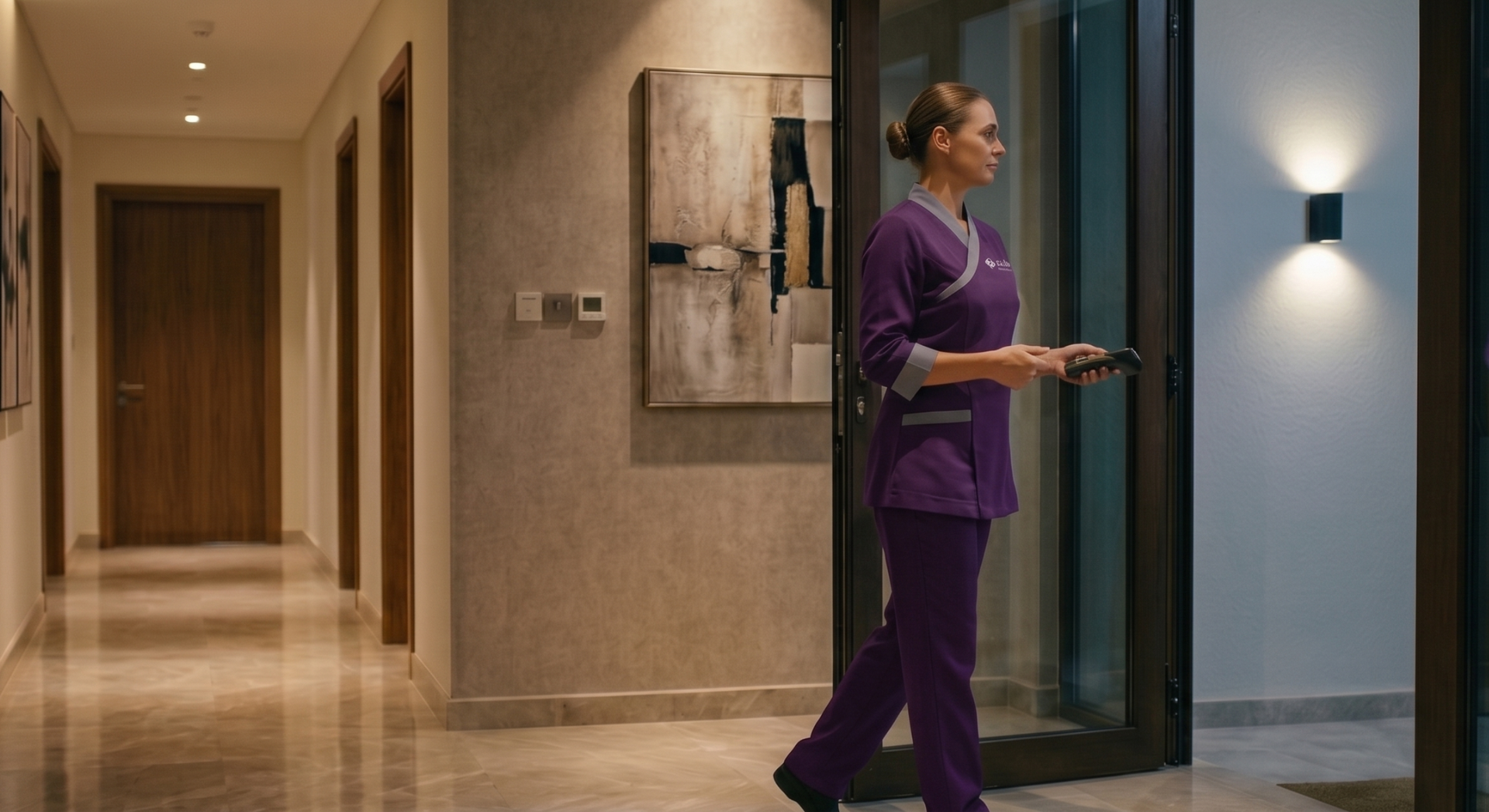
For a live-in maid in Dubai, evening off-hours work best when the family names the end-of-day hour openly, agrees a clear rule for after-hours requests, protects the weekly rest day and respects her personal time. At Yalla Maids, the coordinator walks every family through this in week one.
A calm evening rhythm is one of the simplest things to set up in a live-in maid engagement in Dubai and also one of the most useful across the whole year. The helper lives in the home, so the line between her working hours and her personal time only exists when the family names it. Doing this openly in the first week sets a calm tone that stays for the rest of the contract and the notes below cover the four small habits that make the biggest difference inside the wider live-in maid setup that Yalla Maids handles from start to finish.
Why a Live In Maid Needs a Named End-of-Day Hour
A live in maid spends most of her non-working time in the same physical space where she works, so the boundary between work and rest is invisible unless the family names it. The kitchen where she cooked dinner is where she would normally sit afterwards. The hallway she vacuumed earlier runs past her room. Naming the end-of-day hour openly in the first week is what turns the visibility from awkward into easy for both sides. The wider privacy boundaries inside Dubai homes sit alongside the evening hour and the coordinator walks the family through both pieces in the same conversation.
The Four Habits That Keep Evenings Calm
The four small habits below are what consistently keep evenings settled across a live in maid engagement. Each one is short to put in place and the cumulative effect across the year is meaningful.
- A defined end-of-day hour the family agrees and respects
- A clear rule that after-hours requests are reserved for genuine emergencies
- Permission to rest visibly without the family interpreting the rest as availability
- A predictable weekly rest day with full freedom to leave the home
What Counts as a Reasonable After-Hours Request for a Live In Maid
After-hours requests inside a live-in maid engagement happen sometimes and the framework recognises that a sick child at midnight is a real situation. The honest question is what counts as a reasonable evening request and what counts as routine work quietly slipping into the off-hours. A sick child needing comfort is reasonable. A late snack the family forgot to plan is not. The distinction is simple once it is named at the start and the wider rest schedule rights for a live in maid support the same principle from the regulatory side.
Evening and Rest Day Patterns Compared
The table below pairs each evening dimension with what a sustainable rhythm looks like and what a drifting rhythm looks like. Reading across the columns shows where the small evening work sits, alongside the wider live-in maid hiring path that Yalla Maids coordinates.
Dimension | Sustainable Rhythm | Drifting Rhythm |
End-of-day hour | Defined and respected | Stretched as the family needs |
Evening availability | Off duty unless genuine emergency | Pulled back for small routine asks |
Personal space | Treated as hers in the evening | Family walks in during her off-hours |
After-hours requests | Reserved for real situations | Used for everyday forgetfulness |
Communication channel | Single line for real emergencies | Constant low-grade messages |
Weekly rest day | Full day off, freedom to leave | Eroded into light duty |
How the Weekly Rest Day for a Live In Maid Should Actually Run
The weekly rest day is the boundary that erodes most easily because the family is in the home and small things always seem to come up. The rhythm that holds is to treat the rest day as a real day off where the helper can come and go, sleep late, leave the home entirely if she chooses and not be on call for anything other than a genuine emergency. The wider accommodation standards and employer duties support this rhythm openly and Yalla Maids surfaces the rest day at the start of every engagement so the day is protected from week one rather than from month three. Most families find that the rest day becomes a natural anchor of the week after the first month and the helper returns refreshed on the day after, ready for the routine to pick up cleanly.
Helper Personal Time as a Quiet Retention Lever
The hours when the live-in maid is off duty are when she rests, calls her family back home, watches a show, reads or just sits quietly. Protecting those hours is one of the most underrated things a family can do for a long, settled contract. A helper who feels her off-hours are respected stays years longer than one who feels permanently on call and the investment costs the family nothing in cash. The wider passport retention law for sponsors supports the same principle of treating her time as her own and Yalla Maids walks families through this openly so the rhythm of the home is calm rather than transactional. Small gestures like a quiet sitting space, a private phone signal in her room and a clear understanding that the evening hours belong to her go a long way toward a contract that holds for years rather than just one.
Common Mistakes Families Make on Evening Boundaries
A few patterns show up regularly when families let evening boundaries drift in the first months. Each one is easy to avoid when the conversation happens in week one.
- Treating the helper presence in the home as the same thing as her being on duty
- Allowing routine requests to flow into the evening hours instead of batching them into the working day
- Letting the weekly rest day become light duty because the family is home and small tasks come up
- Walking into the helper room during her off-hours instead of respecting the closed door
- Treating helper phone use during off-hours as inappropriate instead of as her staying in touch with her family
How a Calm Evening Rhythm Pays Back Across the Year
A calm evening rhythm pays back across the whole year because the helper rests properly and brings full energy to the next morning every single day. The home routine settles into a steady pattern, the children get to know a helper who is present, warm and rested rather than tired and edgy at the end of every day and the family stops feeling like they have to manage the evenings actively. The wider first month settling guide covers how the evening rhythm sits inside the wider picture of the first thirty days and the weekly task pattern that follows builds naturally on top of a well-rested helper rather than one who is permanently on call. Across the contract this small evening discipline is what most often separates a placement that runs calmly for four to six years from one that frays before the first renewal.
When the Yalla Maids Coordinator Can Help Reset an Eroded Rhythm
If the evening rhythm has already drifted in the first months, the Yalla Maids coordinator can mediate a calm reset between the family and the helper. A neutral voice surfaces the original conversation and helps both sides agree on a refreshed pattern that holds. The conversation usually takes around thirty minutes and produces a rhythm both sides feel comfortable with. Families with a different setup such as a live-out maid arrangement or who want a wider view of the issue maid visa pathway that sits underneath every placement will find the same calm tone runs through everything Yalla Maids handles for the family.
How the First Week Sets the Live In Maid Evening Tone
The single most useful moment to set the evening rhythm with a live-in maid is the very first week. The family sits with her on day one, names the end-of-day hour, agrees the rule for after-hours requests and walks through where her personal space sits. The conversation takes around twenty minutes and the tone it sets carries through every evening that follows. Families that have this conversation in week one tend not to need it again, while families that put it off until something goes wrong have a harder reset on their hands. The Yalla Maids coordinator briefs the family on this conversation before the helper arrives, so the family has the words ready and the helper walks in already knowing the evening rhythm has been thought about openly.
Conclusion
A calm evening rhythm for a live-in maid in Dubai comes from four small habits: a defined end-of-day hour, a clear rule for after-hours requests, a respected personal space and a protected weekly rest day. None of these costs the family anything in cash and together they make the engagement settle into a steady rhythm across the year. Families about to start a placement can get in touch with Yalla Maids to walk through the evening conversation with a coordinator before the helper arrives.
Frequently Asked Questions
Why does a live-in maid need a named end-of-day hour?
Because she lives in the home and the boundary between work and rest is invisible unless the family names it. Yalla Maids walks every family through the live-in maid evening conversation in the first week so the rhythm is calm from day one rather than from month three.
What counts as a reasonable after-hours request for a live-in maid?
A sick child needing comfort is reasonable, a late dinner the family forgot to plan is not. The live-in maid agreeing to a genuine emergency is part of the engagement. Yalla Maids surfaces the distinction openly at the start so both sides know what they have agreed on.
How should the weekly rest day actually run?
As a full day off during which the live-in maid can come and go, sleep late, leave the home entirely if she chooses and not be on call for anything other than a real emergency. Yalla Maids protects the rest day openly from the first week of the engagement.
Is the family expected to answer the door after the agreed hour?
Yes. Once the agreed end-of-day hour has passed, the live-in maid is off duty unless a genuine emergency arises. The doorbell becomes a family responsibility during off-hours. Yalla Maids names this explicitly during the boundary conversation in week one of the engagement.
Is phone use during a live-in maid off-hours appropriate?
Yes. The live-in maid using her phone during off-hours is how she stays connected with her family back home. Treating phone use as inappropriate signals that the family does not see her as a person with her own life. Yalla Maids treats off-hour phone use as routine.
What if the evening rhythm has already drifted by month three?
The Yalla Maids coordinator can mediate a calm reset between the family and the live in maid. The talk surfaces the original framework and helps both sides agree on a refreshed pattern. The reset usually takes around thirty minutes and saves the engagement from drifting further.
Does protecting off-hours help live in maid retention?
Yes, consistently. A live-in maid who feels her off-hours are respected stays years longer than one who feels permanently on call. The investment costs the family nothing in cash. Yalla Maids treats off-hour respect as a quiet retention lever across every engagement it supports.