


Who Provides Food for a Live In Maid in Dubai
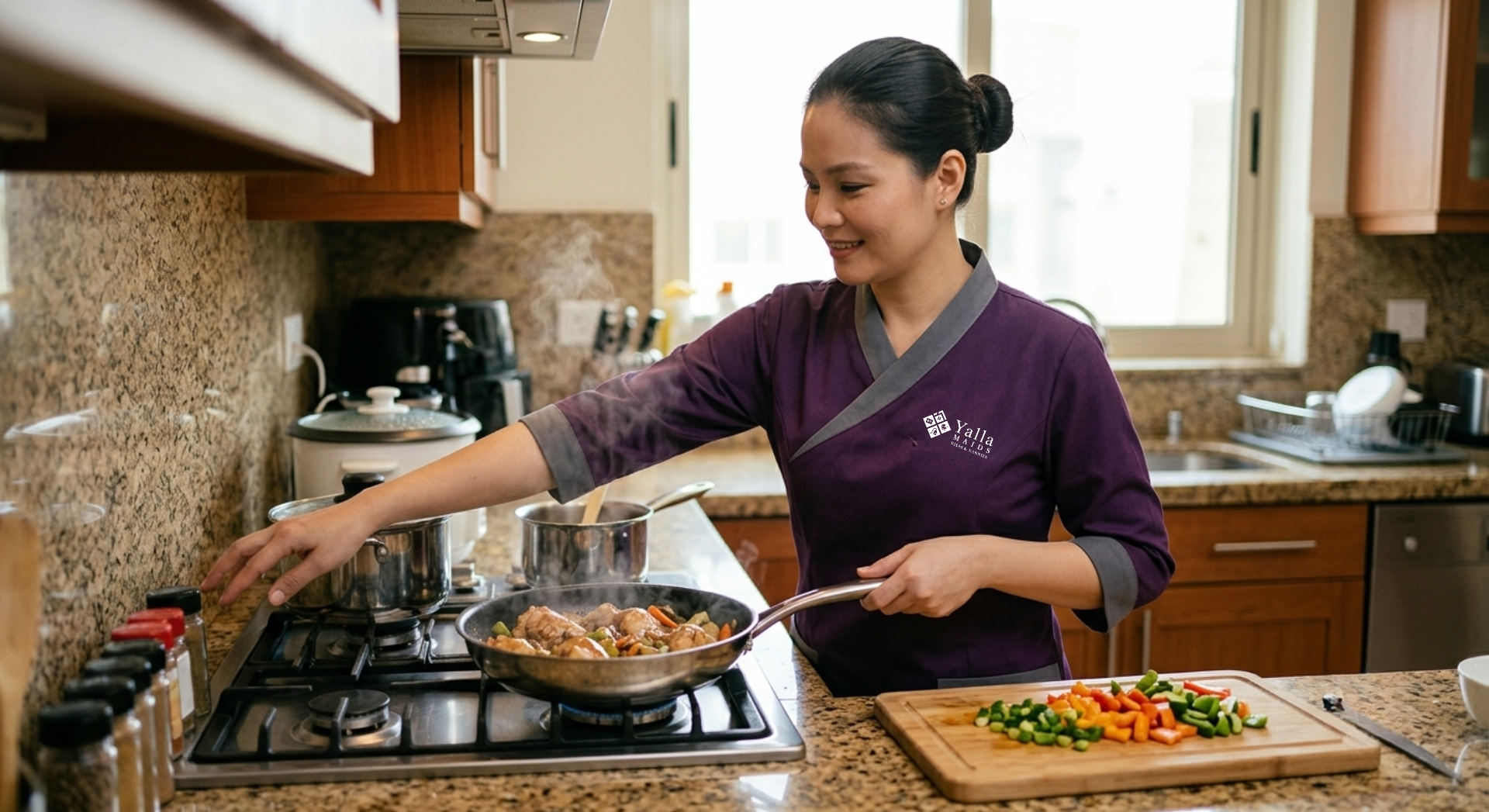
Quick Answer: The employer provides food for a live-in maid Dubai, because feeding a live-in worker is part of the sponsor's duty of care under UAE domestic work rules. Food and accommodation are the family's responsibility at no cost to the worker. Yalla Maids briefs every household on this, which means she is always properly fed and housed.
Feeding arrangements are one of the first practical questions when hiring domestic help. The clear answer is that the employer provides food for a Live In Maid in Dubai, because it is part of the sponsor's duty of care. The live in maid service from Yalla Maids Visas and Nannies sets this expectation from the start, which means there is never any doubt. Providing meals is simply part of a fair, lawful arrangement.
This guide explains who provides food for a Live In Maid in Dubai, what the duty of care covers and how a fair setup works. It covers meals, accommodation and the everyday care that comes with a live in role. The short answer is that the family provides food at no cost to the worker. The rest explains what that means in practice.
Who Provides Food for a Live In Maid in Dubai?
The direct answer is the employer. A family that sponsors a Live In Maid in Dubai provides her meals as part of the household, because food is a basic element of the duty of care. She does not pay for her own food out of her wage. Feeding her properly is a normal, expected part of the arrangement.
This flows from how live in work is defined. A worker who lives in the home is fed and housed by the household, since that is part of what living in means. Through Yalla Maids families understand this from the outset, which avoids any confusion. Food is provided as a matter of course, not as a favour.
What the Duty of Care Covers
Food is one part of a wider duty of care. Alongside meals, the employer provides suitable accommodation, reasonable rest and fair treatment, all of which come with a full time live in role. The accommodation standards and employer duties guide sets out what this includes. Feeding the worker sits naturally within these basic responsibilities.
These duties exist to protect the worker's wellbeing. A live in worker relies on the household for daily essentials, which means providing them is both lawful and simply humane. The what a worker is legally entitled to guide explains the entitlements in full. Food is among the most basic of them.
How Food Is Provided in Practice
In day to day life, providing food is usually straightforward. Most families simply include the worker in the household's meals or stock the kitchen so she can eat properly. The point is that she has enough good food without paying for it herself. How it is arranged can suit the household, as long as the outcome is fair.
Some families prefer to agree preferences early, especially around dietary needs. A quick conversation about meals avoids misunderstandings and keeps the worker comfortable. Through Yalla Maids these expectations are set clearly at placement. A well fed worker is a healthier, happier and more effective one.
What a Live In Maid in Dubai Should Expect
A Live In Maid in Dubai should expect proper meals as a normal part of the role. That means enough nutritious food each day, provided by the household at no cost to her. It is not an optional extra or something deducted from her wage. Reliable meals are simply part of a fair live in arrangement.
She should also expect the wider care that goes with living in. Suitable accommodation, rest and respect all accompany the food as part of the same duty. The villa or apartment accommodation guide explains the living standards involved. Together these make a live in role fair and sustainable.
Provided by the employer | Included? | Cost to the worker |
Daily meals and food | Yes | None |
Accommodation | Yes | None |
Weekly rest day | Yes | None |
Fair treatment | Yes | None |
Set out by Yalla Maids | Yes | At placement |
Key point: the employer provides food for a Live In Maid in Dubai as part of the duty of care, at no cost to the worker. Meals sit alongside accommodation and rest as basic responsibilities, which is why Yalla Maids sets these expectations clearly so she is always properly fed and cared for.
Why Providing Food Matters
Feeding the worker well is more than a legal box to tick. A live in worker who eats properly is healthier, happier and better able to do her job. Skimping on food is both unfair and counterproductive, since it harms the very help the family relies on. Good meals are an investment in a good arrangement.
It also sets the tone for the whole relationship. A household that cares for the worker's basic needs earns trust and loyalty in return. Because Yalla Maids frames food as a normal duty, families start on the right foot. Respect shown in small daily things builds a stable, lasting placement.
Common Questions About Feeding a Live In Maid in Dubai
A few questions come up about food for a live in worker. Families ask whether they must provide it, whether it can be deducted from wages and whether preferences should be discussed. The answers are that food is provided, never deducted and best agreed early. Clearing these up keeps the arrangement fair and simple.
The other common question is about flexibility. Whether the worker eats with the family or prepares her own meals from the household's supplies is a matter of preference, not principle. Because Yalla Maids sets the baseline duty clearly, the details can flex around it. The essential point is that she is always properly fed.
How Yalla Maids Sets the Expectation
From the start, Yalla Maids makes the food duty clear to every family. During placement the household understands that meals, accommodation and rest are their responsibility. Because this is set out plainly, there is no grey area once the worker arrives. Both sides begin with the same understanding of what fair care means.
That clarity is the difference from an informal arrangement. Where an unmanaged setup can leave duties vague, the agency route defines them upfront. A live in worker placed through Yalla Maids is properly fed and housed as standard. The basics are never left to chance.
Food as Part of a Fair Home
Providing meals is really about treating the worker as part of a fair home. Someone who lives under the same roof should not have to worry about where her next meal comes from. When the household takes care of this naturally, the arrangement feels respectful rather than transactional. Good food is one of the simplest signs of a considerate employer.
This mindset tends to shape the whole placement. A family that feeds the worker well usually treats her well in other ways too, which builds trust. Because the basics are covered without fuss, the relationship starts on solid ground. Small daily kindnesses add up to a stable, positive home.
Dietary Preferences and Practicalities
Every household runs its kitchen a little differently, which is why a short chat about food helps. Discussing dietary needs, cooking arrangements and meal times early avoids any awkwardness later. The worker may have preferences worth accommodating where reasonable, which makes daily life smoother. Good communication keeps mealtimes simple.
None of this changes the core duty, only how it is delivered. Whether meals are shared or prepared separately, the worker is always properly fed at the household's expense. Because Yalla Maids sets that baseline clearly, the practical details can be arranged to suit both sides. Flexibility on the how sits comfortably on top of a fixed responsibility.
A Sign of a Well Run Household
How a family handles food often reflects how the whole arrangement is run. A household that provides good meals as a matter of course tends to be organised and fair in other areas too. This reassures a worker weighing a placement, since it signals genuine care. The small things reveal the bigger picture.
It also pays off in loyalty and longevity. A worker who feels looked after is far more likely to stay and give her best. Because a managed placement sets these standards from the outset, families rarely stumble on the basics. Caring for the worker's needs is simply good sense as well as good practice.
Conclusion: The Employer Provides the Food
So who provides food for a Live In Maid in Dubai? The employer does, because feeding a live in worker is part of the sponsor's duty of care, at no cost to her. Through Yalla Maids this expectation is set clearly, which means meals sit alongside accommodation and rest as basic responsibilities. Families arranging live in help can start with Yalla Maids and begin with a fair, well understood setup.
Frequently Asked Questions
Who provides food for a Live In Maid in Dubai?
The employer provides food for a Live In Maid in Dubai, because it is part of the sponsor's duty of care at no cost to the worker. Yalla Maids sets this expectation at placement, which means meals are always the household's responsibility rather than hers.
Does a Live In Maid in Dubai pay for her own food?
No. A Live In Maid in Dubai does not pay for her own food, since meals are provided by the household as part of the duty of care. Yalla Maids makes this clear from the start, which means food is never deducted from her wage in any way.
What does the employer provide for a Live In Maid in Dubai?
For a Live In Maid in Dubai, the employer provides food, suitable accommodation, a weekly rest day and fair treatment. Yalla Maids sets out these duties at placement, which means the worker's basic needs are covered by the household at no cost to her.
Can food be deducted from a Live In Maid in Dubai's wage?
No. Food cannot be deducted from a Live In Maid in Dubai's wage, because meals are a duty of care provided by the household. Yalla Maids explains this clearly, which keeps the arrangement fair and ensures she is properly fed without any cost to herself.
Does a Live In Maid in Dubai eat with the family?
Whether a Live In Maid in Dubai eats with the family or prepares her own meals from the household supplies is a matter of preference. Yalla Maids sets the baseline duty that she is always properly fed, which lets the practical details flex around each household.
Is providing food a legal duty for a Live In Maid in Dubai?
Yes. Providing food is part of the legal duty of care for a Live In Maid in Dubai, alongside accommodation and rest. Yalla Maids briefs families on this, which means the worker's meals are treated as a basic responsibility rather than an optional extra.
How does Yalla Maids set food expectations for a Live In Maid in Dubai?
Yalla Maids sets food expectations for a Live In Maid in Dubai clearly at placement, explaining that meals, accommodation and rest are the household's duty. Because this is defined upfront, there is no grey area, which keeps the worker properly fed from her very first day.